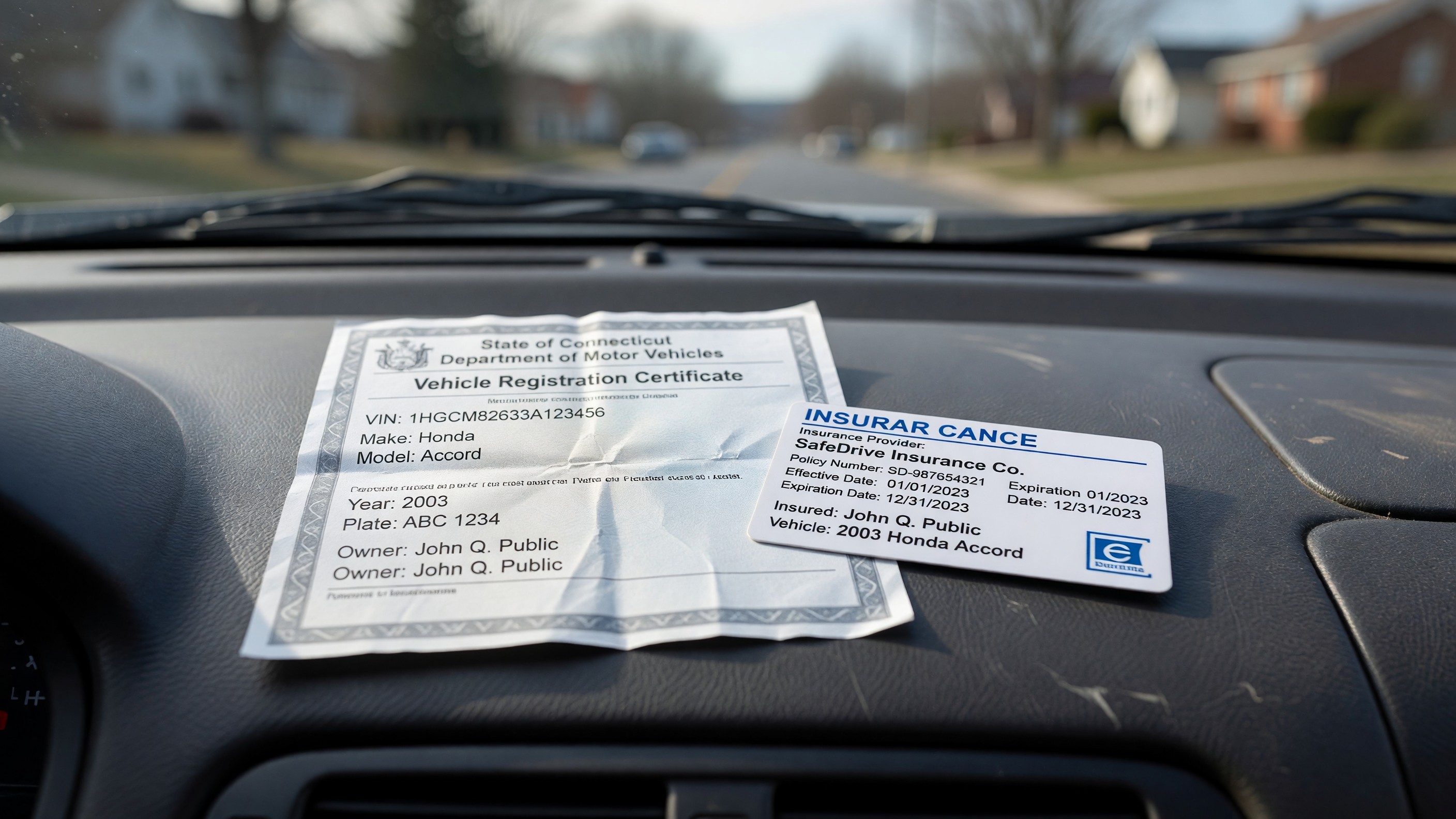
Connecticut requires every motor vehicle operated on public roads to be registered with the Connecticut Department of Motor Vehicles. Registration ties a specific vehicle to a specific owner, assigns a license plate, and creates the record the state uses to track title, insurance compliance, and emissions testing obligations. For most vehicle owners, registration is a background process renewed every two years alongside an emissions test. For anyone buying, selling, moving, or inheriting a vehicle, the requirements become considerably more involved.
This article covers how Connecticut vehicle registration works: what documents are required for a newly purchased vehicle, how fees are calculated, when renewal is due, how to handle a lapsed registration, and the special cases that arise with title transfers and out-of-state vehicles.
Who must register a vehicle in Connecticut
Any motor vehicle operated on Connecticut’s public roads must be registered. This includes passenger cars, trucks, motorcycles, motor homes, and trailers above certain weight thresholds.
Exemptions include: vehicles registered in another state where the owner is a temporary Connecticut resident within the first 60 days of establishing residency; vehicles operated exclusively on private property; farm vehicles operated within a limited radius under agricultural exemptions; and vehicles covered by dealer plates during transport.
Antique vehicles — 20 years old or older under Connecticut’s antique plate statute — may be registered under a special classification restricting operation to exhibitions, parades, and occasional pleasure use. Antique registration fees differ from standard fees.
Documents required to register a vehicle
Purchased from a licensed Connecticut dealer: The dealer handles title transfer and registration at the point of sale. The buyer receives a temporary registration while the permanent registration is processed. No separate DMV visit is required.
Private sale (purchased from an individual): Registration must be completed in person at a Connecticut DMV office. Required documents:
- Certificate of Title — the seller must sign the title over to the buyer. Connecticut titles have a designated assignment section on the reverse.
- Bill of Sale — establishes the purchase price for sales tax purposes. Connecticut collects a 6.35% sales tax on most vehicle purchases (7.75% on vehicles priced above $50,000).
- Proof of Connecticut insurance — an insurance card or binder showing the vehicle is insured.
- Completed Form H-13B (Application for Registration and Certificate of Title) — available at DMV offices and at portal.ct.gov/DMV.
- Payment for registration fees and applicable sales tax.
Vehicle from out of state: Out-of-state vehicles require a Connecticut VIN verification, and the out-of-state title must be surrendered for a Connecticut title. If the out-of-state title carries a lien, the lienholder must release it first.
Inherited vehicle: Registration of an inherited vehicle requires proof of ownership transfer through the estate — Letters Testamentary, Letters of Administration, or an Affidavit of Surviving Spouse depending on how the estate was handled.
How Connecticut calculates registration fees
Connecticut’s registration fee is based on the vehicle’s gross vehicle weight (GVW) as listed on the title or manufacturer label. Fees increase by weight class. An additional fee applies for the license plate (new plates versus retaining an existing number differ). Transfer fees apply when moving plates from a prior vehicle.
Connecticut municipalities also collect a motor vehicle property tax through the local tax collector — a separate bill from the town, not collected by DMV, but it generally must be current before DMV will process renewal.
Verify all current fee amounts at portal.ct.gov/DMV before visiting — fees are updated by legislative action.
Registration period and renewal
Connecticut registers most passenger vehicles on a two-year cycle. The expiration date is printed on the registration certificate and the plate sticker.
Renewal notices are mailed approximately 60 days before expiration. Connecticut allows online renewal for vehicles that have passed emissions testing and have no outstanding fees or suspensions. Vehicles due for emissions testing must test before renewal can be completed.
Late fees apply to renewals completed after the expiration date. Operating on an expired registration is a moving violation subject to a fine.
What happens when registration lapses
A lapsed registration means the vehicle cannot legally be operated on public roads. For a vehicle being stored and not driven, the owner can file a plate turn-in — surrendering the plates to DMV — and receive a credit toward future registration. This stops fees from accumulating on a vehicle not in use.
When the vehicle returns to road use, the owner must re-register it, pay applicable back fees, and pass emissions testing if that cycle is due.
Moving within or to Connecticut
Connecticut residents who move within the state must update their DMV address record within 48 hours of the move. Address changes can be made online at portal.ct.gov/DMV. The registration itself does not change — only the address on file — but a wrong address means renewal notices go to the wrong place.
New Connecticut residents from another state have 60 days to transfer their out-of-state registration to Connecticut.
Frequently asked questions
Can I drive a car I just bought before registering it? Yes — with a temporary plate issued by the dealer (for dealer purchases) or a 5-day transit permit (for private sales where the buyer needs to transport the vehicle to DMV). Do not drive an unregistered vehicle without one of these temporary authorizations.
What if I lose my registration certificate? Duplicate certificates are available at any DMV office or branch, or in some cases online. There is a small fee.
My registration was suspended — what do I do? Suspensions result from unpaid fines, insurance lapses, emissions failures, or outstanding municipal property tax. The suspension notice specifies the reason. Resolve the underlying cause and pay any reinstatement fee before the registration can be restored.
Do I need to register a vehicle I only use on private property? No. The registration requirement applies only to vehicles operated on public roads.