Most Connecticut winter checklists stop at tires and antifreeze. The part drivers tend to skip is the legal side: rules about clearing snow from your car, where studded tires are allowed, and keeping your windshield usable. None of it is complicated, but each item can cost you a ticket or a crash if you ignore it. This guide covers the mechanical basics first and then the requirements that catch people out.
DMVCT Compliance Review is not the Connecticut Department of Motor Vehicles or any other state agency. This is general information, not legal advice. Check the statutes and state agencies for current details.
Tires: what the law says and what actually helps
Connecticut does not require snow tires. Unstudded winter tires are legal year-round, so there is no deadline to put them on or take them off. Published summaries of the state’s tire rules point to one real restriction: studded tires and tire chains. According to those summaries, studded tires are allowed only from November 15 through April 30, with exceptions for certain vehicles such as emergency vehicles. The rule is found in Connecticut’s motor vehicle statutes, and you should confirm the current text before putting studs on a car, because we could not confirm the penalty amounts against a primary source and do not quote them here.
For most drivers the practical question is not legal but mechanical. All-season tires lose grip as rubber hardens in cold weather, and a dedicated winter tire is built from a compound meant to stay flexible in the cold. If your all-seasons are worn near their tread wear bars, they are the weak point on an icy hill regardless of what the law allows. A simple tread check with a penny or the built-in wear bars takes a minute.
Other tire tasks worth doing before the first storm:
- Check pressure. Tire pressure drops as temperatures fall, and the pressure printed on the driver’s door jamb placard is the target, not the number molded into the sidewall.
- Look for sidewall cracks and bulges. Cold exposes weakness.
- Rotate on schedule. Even wear gives you the most usable tread.
- Check the spare. A flat in a snowstorm is a bad time to find out the spare is soft.
Battery: not a legal item, but the main cause of winter no-starts
There is no Connecticut rule about batteries, so this is purely a reliability issue. Cold slows the chemical reaction inside a lead-acid battery, so a battery that started the car fine in September can fail on a January morning. Most auto parts stores and many repair shops will test a battery for free or for a small fee. A test before winter is cheap compared with a tow.
Signs that a battery is on its way out include slow cranking, dim headlights at idle, and a dashboard battery warning. Corroded terminals, which look like white or blue crust, can also cause starting problems and are easy to clean. If the battery is several years old, replacing it before the cold sets in is a reasonable choice. Keep jumper cables or a portable jump starter in the car, and consider keeping the vehicle’s registration and insurance card in the glove box where you can find them if you end up dealing with a roadside tow.
Wipers, washer fluid, and a clear windshield
Connecticut requires every motor vehicle to have a windshield wiper in effective working order, positioned in front of the operator, under Section 14-99f of the General Statutes as summarized by legal references. Winter makes this requirement matter more. Streaky or torn blades smear salt spray instead of clearing it.
Before the season:
- Replace worn wiper blades. Winter blades are built to resist ice buildup.
- Fill the washer reservoir with a fluid rated for freezing temperatures. Summer fluid can freeze in the lines.
- Test the defroster and rear defogger before you need them.
- Clear all glass fully before driving, not just a peephole. A driver with a small scraped patch has an obstructed view, and that is both a safety problem and the sort of thing an officer can stop you for.
Headlights are part of visibility too. Legal summaries indicate Connecticut requires headlights in adverse conditions rather than having a strict wipers-on, lights-on rule, but the safest habit is simple: turn them on whenever the wipers are running, in snow, rain, or fog.
The snow and ice removal rule most drivers miss
This is the requirement that surprises people most. Connecticut General Statutes Section 14-252a requires operators to remove accumulated ice and snow from the hood, trunk, and roof of their vehicles so it does not endanger people or property. The Connecticut General Assembly’s summary of the act that created it says a basic violation is an infraction with a $75 fine, payable by mail. If ice or snow that has not been cleared causes injury or property damage, the penalties rise to a range of $200 to $1,000 for noncommercial vehicles, and the case involves a court appearance.
The law does not apply to a parked vehicle or to snow and ice that accumulates while the vehicle is already being driven, such as in a storm that starts mid-trip. We cover the rule in more detail in our guide to snow and ice removal from your vehicle in Connecticut.
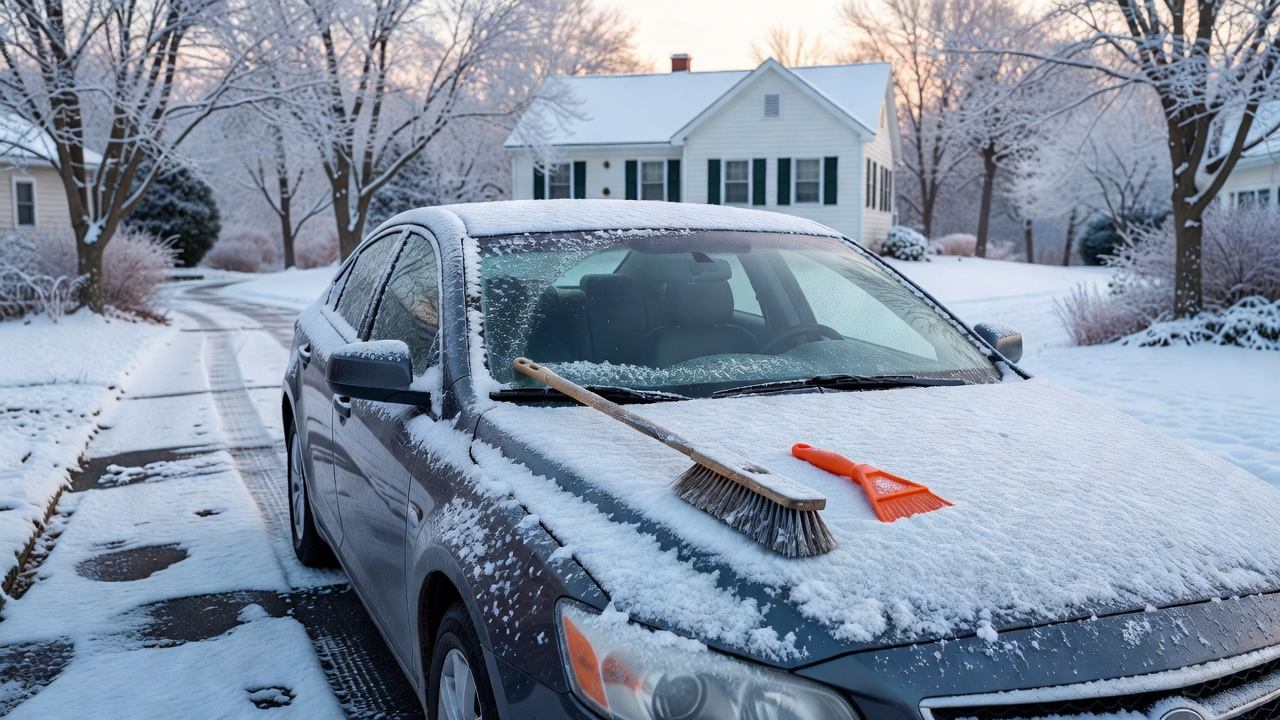
The practical lesson: keep a long-handled snow brush and an ice scraper in the car, and clear the roof every time, not only the glass. A sheet of snow that slides off a roof at highway speed can land on the windshield of the car behind you.
What to keep in the car
A small kit handles most winter problems:
- Snow brush with scraper
- Small shovel
- Flashlight and spare batteries
- Warm gloves and a blanket
- Jumper cables or a jump starter
- Basic first aid supplies
- A phone charger or power bank
Add a bag of sand or cat litter for traction if you drive a vehicle that tends to get stuck, and keep the fuel tank at least half full. A fuller tank reduces the chance of fuel line freeze-up and gives you more heat time if you end up stuck.
Registration, inspection, and paperwork
Winter is also a good time to confirm your registration and insurance are current, since a breakdown or accident puts them in front of an officer quickly. If your registration renewal falls in the cold months, the DMV’s online renewal avoids a trip. Vehicles that are subject to Connecticut’s emissions testing still need to pass on the normal schedule, and a check-engine light that stays lit can complicate that, so address it before it matters.
A short pre-winter routine
Pick one weekend before the first forecast of snow. Test the battery, check the tires and pressure, replace the wipers, fill the washer fluid, build the emergency kit, and put the snow brush where you will actually reach for it. Then make clearing the roof a habit as automatic as buckling the seat belt. The mechanical items protect the car; the roof habit protects other drivers and keeps a $75 ticket off your record.