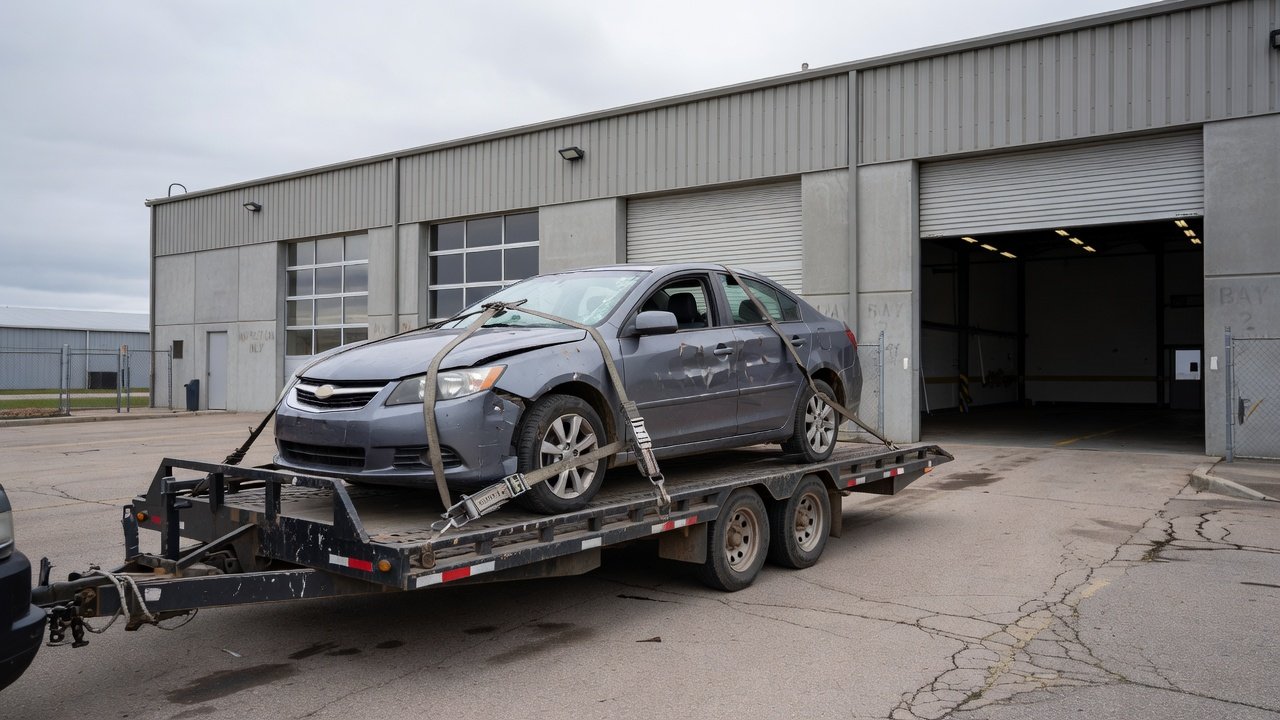
When a Connecticut vehicle is branded salvage, two things happen at once that owners frequently learn about separately and in the wrong order. The title carries a permanent brand, and the registration is cancelled. The second is the immediate problem: the vehicle is not legally operable on Connecticut roads, and no amount of completed repair work changes that until the state has inspected it.
The inspection is the gate. Everything else — the repairs, the receipts, the photographs — exists to get through it.
What puts a vehicle in this category
A vehicle receives a salvage designation when an insurer determines it is a total loss, or when a title arrives already stamped “salvage” from Connecticut or another state. Once branded, the Connecticut DMV cancels the registration and operating the vehicle becomes illegal.
This catches two groups. The first is owners whose own car was totaled and who decide to buy it back from the insurer and repair it. The second, and the one where expensive mistakes cluster, is buyers purchasing salvage vehicles at auction with a plan to rebuild and register them.
The brand that ends the conversation
Before any other consideration, read the exact wording on the title. Connecticut treats salvage brands as three distinct categories with very different outcomes:
- “Salvage” — can be rebuilt, inspected, and re-titled.
- “Salvage Parts Only” — cannot be registered or re-titled. Ever.
- “Salvage Unrebuildable” or “Salvage Unrepairable” — same. No path to registration under any circumstances.
Those second and third categories are absolute. There is no inspection that clears them, no appeal that reverses them, and no quality of repair work that overcomes them. A vehicle carrying one of those brands is a parts source and nothing else.
This is the single most consequential thing to verify before money changes hands at an auction. Auction listings describe vehicles in their own shorthand, and the distinction between a rebuildable salvage title and a parts-only title is the difference between a project and a very expensive pile of components. Read the actual title document, not the listing.
What the inspection requires
Connecticut’s salvage inspection is a documentation audit as much as a physical examination. The inspector is establishing that the vehicle was repaired with legitimately sourced parts and that the repairs are structurally sound. Assemble the paperwork during the rebuild, not after — reconstructing receipts retroactively is where most failed inspections originate.
Receipts for major component parts. Engines, transmissions, frames, doors, fenders, and comparable major components. If a component came from another used vehicle, the receipt must include that donor vehicle’s VIN. This is the theft-prevention core of the entire program, and it is where inspectors are least flexible. A rebuild using undocumented used parts will not pass.
The original insurance appraisal. The damage assessment that produced the total-loss determination in the first place. It establishes the baseline against which the repairs are evaluated.
A completed salvage repair report — Form K-186. The formal statement of what was repaired and how.
Photographs. Clear images of the entire vehicle, the damaged areas before repair, the repairs in progress, any welding, and the vehicle before painting. The pre-paint photographs matter disproportionately. Once a repair is painted, an inspector cannot evaluate the weld quality or the structural work underneath, and photographs are the only remaining evidence. Owners who photograph only the finished result routinely have to justify why the underlying work cannot be assessed.
Air Bag Certification Statement — Form B-303, if the vehicle is equipped with airbags. Given that salvage vehicles very often reached total-loss status through a collision that deployed the airbags, this applies to most of them. Non-functional or improperly replaced airbag systems are a common failure point.
How and where the inspection happens
Two routes are available. The DMV conducts salvage inspections at its Wethersfield facility, Monday through Friday from 8 a.m. to noon, with arrival required by 11 a.m. Alternatively, a licensed dealer or repairer authorized by the state can perform the inspection.
The logistical requirement that surprises people: the vehicle must arrive on a flatbed trailer, with no wheels touching the ground. This follows directly from the registration cancellation — the vehicle cannot legally be driven, including to its own inspection. Budget for transport, and do not plan to drive the car to Wethersfield.
The inspection fee is $88, payable in advance or at the inspection. If the vehicle has never been registered in Connecticut, or is ten years old or older, a $10 administrative fee applies at registration.
After a pass
A vehicle that passes receives a new Connecticut title with the salvage stamp removed and the word “Rebuilt” printed on it. The inspection clearance does not expire, which gives some scheduling flexibility between passing inspection and completing registration.
The rebuilt brand is permanent. It follows the vehicle through every subsequent sale and across state lines, and it must be disclosed to any buyer. That has a durable effect on value — a rebuilt-title vehicle typically carries a substantial discount against a comparable clean-title example, and the discount does not diminish with time or mileage.
Two downstream consequences are worth planning for before starting a rebuild:
Financing. Many lenders decline to finance rebuilt-title vehicles outright. Buyers of your rebuilt vehicle may need to pay cash, which narrows the resale market considerably.
Insurance. Liability coverage is generally straightforward. Comprehensive and collision coverage on a rebuilt-title vehicle is harder to obtain, and some carriers decline it. Confirm with your own carrier before the rebuild, not after.
Running the arithmetic honestly
The economics of a Connecticut rebuild only work when the numbers are assembled in full and in advance. The real total is the auction purchase price, plus parts, plus labor, plus transport to and from inspection, plus the $88 inspection fee, plus registration — measured against the resale value of a vehicle that will carry a rebuilt brand permanently and may be difficult for a future buyer to finance or fully insure.
That calculation works for some vehicles and fails badly for others. It fails most often on late-model vehicles with extensive electronics and advanced driver-assistance systems, where sensor replacement and calibration costs are high and the parts documentation burden is heaviest.
Do the arithmetic before bidding, and read the title brand before doing the arithmetic.